Tuesday, 24 June 2014

Website Analysis


Lana Del Rey's website displays exclusivity towards her fans through the options of how to purchase her music. Her music is available on different platforms such as Lps and CDs, appealing and giving a wider choose of access to her fans preferred way.


The website also reflects how Lana wished to present herself, through her retro, smooth, 1960 style. This is seen through the use of many filters on her images to give a certain 'timeless' and 'vintage' effect, showing how she wishes to be seen in an artistic style. There are many close-ups and poses of herself in the photos, displayed in  a stylish and tasteful appearance, evoking that she is the main product.


In another section there is the listing of her future live performances, in which leads to the option of purchasing a ticket for that venue. This is clearly set out in a simple style, making it easy for the viewer to see the listing.


There is also a display of her albums and the music included, along with a gallery of her various photos from different occasions. This shows that Lana wishes to give her fans more insight and access to her more personal elements. 

Saturday, 14 June 2014

Analysis of a CD Cover

Babes In Toyland ~ Fontanelle


The cover photo — an image of a naked doll held up in front of a mirror — was taken for the album by photographer  Cindy Sherman. The image itself, is rather obscure and unquie reflecting the nature of the band's attitude and how they choose to be original in their work and play freely.

The band has explained the album's name as referring to the soft spot on the top of a baby's skull, as well as to a little fountain used by fairies. It is also the name of a magician consulted by Gilles de Rais, the real-life murderer who inspired the fairy tale "Bluebeard".

The dark colouring of the image connotes a more heavy sound, as such colours are associated with 'Rock'. The red font accompanies this idea, as it stands-out 'loud and proud', being a vivid colour.

Strangely, there is no 'Parent Advisory' sticker, as the album does contain much explicit content. However, this may be because it is original artwork and is not presented in it's sale state.

The album cover is rather simplistic from the image and solid black collum, promoting a straightforward and no nonsense style, that the product is raw and to the point.

History of Music Videos

According to the Internet Accuracy Project, The Big Bopper was the first to coin the phrase "music video", in 1959. A music video or song video is a short film integrating a song and imagery, produced for promotional or artistic purposes. Modern music videos are primarily made and used as a marketing device intended to promote the sale of music recordings. Although the origins of music videos date back much further, they came into prominence in the 1980s, when MTV (airing in 1981) was solely based displaying the videos back-to-back. Prior to the 1980s, these works were described more as 'promotional videos'.
Music videos use a wide range of styles and techniques, including animationlive action filming, documentaries, and non-narrative approaches such as abstract film. Some music videos blend different styles, such as animation, music, and live action. Many music videos interpret images and scenes from the song's lyrics, or relate to particular subject. Other music videos may be without a set concept, being merely a filmed version of the song's live performance.

An Early example of a music video is St Louis Blues. Blues singer Bessie Smith appeared in a two-reel short film called Saint Louis Blues ( 1929 ) featuring a dramatized performance of the hit song. It was shown in theatres until 1932.
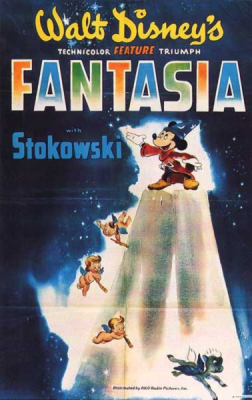
In 1940, Walt Disney released Fantasia, an animated film based around famous pieces of classical music. The Warner Brothers cartoon, even today billed as Looney Tunes and Merrie Melodies, were initially fashioned around specific songs from upcoming Warner Brothers musical films. Live action musical shorts, featuring such popular performers as Cab Calloway, were also distributed to theatres.


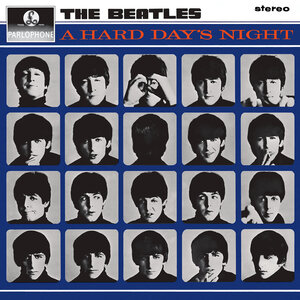
The defining work in the development of the modern music video was The Beatles ' first major motion picture, A Hard Day's Night in 1964 , directed by Richard Lester . The musical segments in this film arguably set out the basic visual vocabulary of today's music videos, influencing a vast number of contemporary musicians, and countless subsequent pop and rock group music videos.


Thursday, 12 June 2014

Music Video Contextual Analysis

Music Video -  Heart-Shaped Box ~ Nirvana
Director - Anton Corbijn (With much input from Kurt Cobain)


There are many dramatic close-ups of Kurt Cobain’s face, during the chorus in the lines ‘Hey! Wait!’ These close-ups matched with the lyrics and timed to the bar, suggest urgency and the intention to catch the viewer/listener’s attention. Also the switch between the focused and unfocused shot, causes the viewer to experience hallucinated and ghosted movement, evoking a sense of squander and confusion.


There is also many lyrical reference visuals. For example in the line 'meat-eating orchids forgive no one just yet', inferring sexual intercourse, the video displays foetuses hanging in the trees and a young girl in a Ku Klux Klan outfit, jumping and trying to reach them. The reasoning for this is because much of the video contains naturalistic imagery yet controversial imagery. Sex for example is seen as a socially uncomfortable  yet completely biological  subject and the video explicitly displays the reality of it and evokes other nature themes of the 'life and death' aspect, in a thought-provoking and open perspective. Again the Ku Klux Klan girl, possibly suggests spoiled innocence and man-made corruption of the world, and how people themselves destroy the natural beauty of the world.  


There are slight intertexual references such as towards the scenery of 'The Wizard Of OZ', from the bright and artificial colouring paired with the fields of flowers and trees. There are many religious symbols shown such as the 'crucifixion', which  along with KKK reference, caused much controversy. However ultimately much of the video is left to the viewer's interpretation.


The video is very much done in a creative style, with Kurt Cobain planning much storyboarding, going into immense detail. It has a possible slight narrative story but also, the band is seen to be a large part of it too with their performance of the song, due to their great input.


Also this song, album and band are so amazing and wonderful. ♥♪♫

Goodwin's music video analysis


Andrew Goodwin writing in 'Dancing in the Distraction Factory'
(Routledge 1992)

  • Music videos demonstrate genre characteristics
    (e.g. stage performance in metal video, dance routine for boy/girl band).
  • There is a relationship between lyrics and visuals
    (either illustrative, amplifying, contradicting).
  • There is a relationship between music and visuals
    (either illustrative, amplifying, contradicting).
  • The demands of the record label will include the need for lots of close ups of the artist and the artist may develop motifs which recur across their work
    (a visual style).
  • There is frequently reference to notion of looking (screens within screens, telescopes, etc) and particularly voyeuristic treatment of the female body.
  • There is often intertexual reference (to films, TV programmes, other music videos etc).  

Welcome!

Welcome to my A2 blog, hope you enjoy! ^-^
On this blog, I will include: research, planning and evaluation on my music video project.